
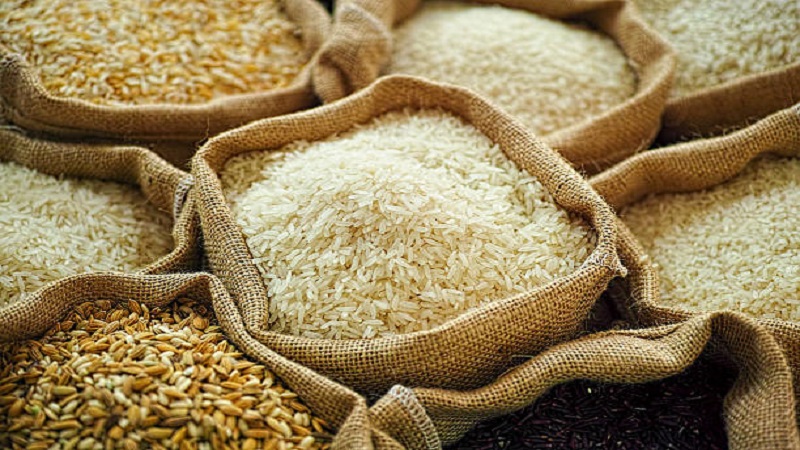
India restricted sugar exports in May 2022 and outlawed the export of wheat. Additionally, it has prohibited the export of broken rice and imposed an additional 20% tax on milled and semi-milled rice (excluding parboiled and basmati varieties).

By increasing supplies and reducing food inflation, these actions seek to manage "national food security.” Since over 40% of the world’s grain trade comes from India, which exports the most rice, export limitations would deepen problems with the food supply and increase worldwide inflationary pressures.
Additional export taxes will make Indian rice exports uncompetitive on the global market, enticing consumers to switch to its rivals, including the top five rice exporters Vietnam, Thailand, and Pakistan. But they won’t be able to cross even together.
Only 4 million tonnes of the annual 8.9 million tonnes of rice produced in Pakistan are eaten domestically; the remainder is exported. As a result, Pakistan has a wonderful chance to increase its rice exports and raise prices thanks to India’s prohibition.
It will generate income and preserve the food supply by permitting the export of basmati rice while prohibiting other types.
Massive floods, which have destroyed millions of acres of standing rice harvests in Sindh and Punjab, are currently wreaking havoc in Pakistan.
Initially, a 9 million tonne harvest was anticipated for 2022. However, the estimates were reduced to 8.6 million tonnes owing to a lack of canal water during the rice planting season. Out of this, Sindh province projected production at 2.3 million tonnes, with the majority coming from its rice zone, which has been the most severely affected by the floods.
Recently, the International Centre for Integrated Mountain Development and the Pakistan Agricultural Research Council conducted a quick evaluation of crop losses in Sindh (PARC). According to a technique based on satellite data and measurements of damage intensity at the district and tehsil levels, nearly 80% of the rice crop’s land was lost.
Estimated production losses range from 1.8 to 1.9 million tonnes. In addition to standing crops, the water has damaged stockpiles that were stored in homes for both personal use and the seed for the following season. An estimated 2.2 million tonnes of crops were lost in total, the majority of which were non-Basmati (coarse) kinds.
Many support restricting rice exports like India does because they believe Pakistan is on the verge of a serious food security issue. The expected shortage of wheat in the nation, loss of the rice crop due to the flood, delay in the planting of wheat due to flood water stagnating in fields, significant loss of livestock in flood-affected areas, increased reliance of the poor and lower-middle class on wheat- and rice-based products in their diets due to the high cost of meat, milk, and fruit, low production of staple foods worldwide due to climate change, and disruption of the world’s food supply chai
These elements might increase the likelihood of ongoing food shortages and price increases in the upcoming months. On the other hand, rice exporters and farmers support exports for a variety of reasons.
First, despite flood losses, Pakistan’s rice crop is anticipated to be approximately 6.4 million tonnes. After accounting for domestic consumption, the nation will have a 2.4 million tonne exportable surplus.
Second, Pakistan does not consume rice as its main grain. In Pakistan, 18 kilograms of rice are used per person each year, compared to 190 kg and 78 kg in Bangladesh and India, respectively. Therefore, it can be said that, when viewed from the standpoint of food security, rice is less sensitive than wheat.
Third, just around 3.8 percent of the food CPI basket’s weight is given to rice in Pakistan’s consumer price index (CPI). Therefore, like with wheat, consumers would not be severely impacted by increasing rice costs.
Fourth, it requires time, money, and effort to penetrate export markets. If export restrictions are implemented, Pakistan might lose important markets and clients. In particular, basmati variants are frequently sold under brand names, and any disruption in supply might harm the value of such trademarks.
Fifth, in addition to all of that, basmati rice is primarily farmed in areas that have not experienced flooding. The basmati crop is therefore virtually unharmed. Basmati varietals are currently being harvested in Punjab, and because of favorable weather, the yield is 10–20 percent more than it was the previous year.
Priorities conflict with the government. On the one hand, the government seeks to reduce inflation while maximizing foreign exchange earnings through exports. Additionally, it is challenging to strike a balance between the opposing interests of its farmers and customers.
If there are no restrictions on rice export, Pakistani rice may become more competitive on the world market due to the excessive depreciation of the rupee, which is likely to lead to excessive rice exports and scarcity in the local market.
To fulfill its export goal of 750,000 tonnes of basmati rice, Pakistan may adopt a cautious policy that prohibits shipments of non-basmati (coarse) rice and sets a limit of 2 million tonnes.
Information in this article comes from third party providers. This website does not provide explicit or implied warranty for such information and is not liable for any losses directly or indirectly caused by using such information.